
The Feline Reproductive Cycle: Duration, Stages, and the Biological Imperative for Spaying

For intact female cats, known as queens, navigating the reproductive cycle is an intense, hormone-driven process that can be stressful for both the cat and the owner. The colloquial term “in heat” refers to the Estrus phase, the segment of the cycle during which the queen is receptive to mating and can become pregnant. Understanding the duration and mechanics of this cycle is the foundation for responsible pet ownership, particularly regarding early spaying.
On average, the Estrus phase lasts between four to seven days, though the biological range is wide, extending from a minimum of 1 day to a maximum of 21 days. Because of the inherent risk of unwanted litters and the physiological strain, veterinarians strictly advise that unspayed queens must be kept exclusively indoors to prevent any contact with intact male cats (toms).
The Initiation of Puberty: First Estrus Cycle
Female cats reach sexual maturity—puberty—remarkably early. Most queens experience their inaugural heat cycle around six months of age. However, this can be highly variable, occurring as early as four months or as late as nine months, depending on several factors:
- Genetics and Breed: Shorter-haired and lighter-weight breeds often mature faster.
- Body Condition: Optimal body weight and nutrition hasten the onset of puberty.
- Photoperiod Exposure: The primary external regulator. Exposure to consistently long daylight hours (real or artificial) triggers the start of cycling.
This early maturation means that an unspayed female cat is reproductively viable—and capable of having a litter—well before she reaches her first birthday, underscoring the veterinary recommendation for early-age spaying.
Recognizing Estrus: Distinct Behavioral Signals
The behavioral changes in a queen during estrus are unmistakable and often dramatic. Owners frequently confuse these intense displays with signs of illness or distress. The primary purpose of these behaviors is to signal receptivity and attract a mate:
- Acoustic Signaling (Yowling): The most recognizable sign is persistent, loud, mournful vocalization. This is distinct from regular meowing and is an attempt to advertise her state to males over long distances.
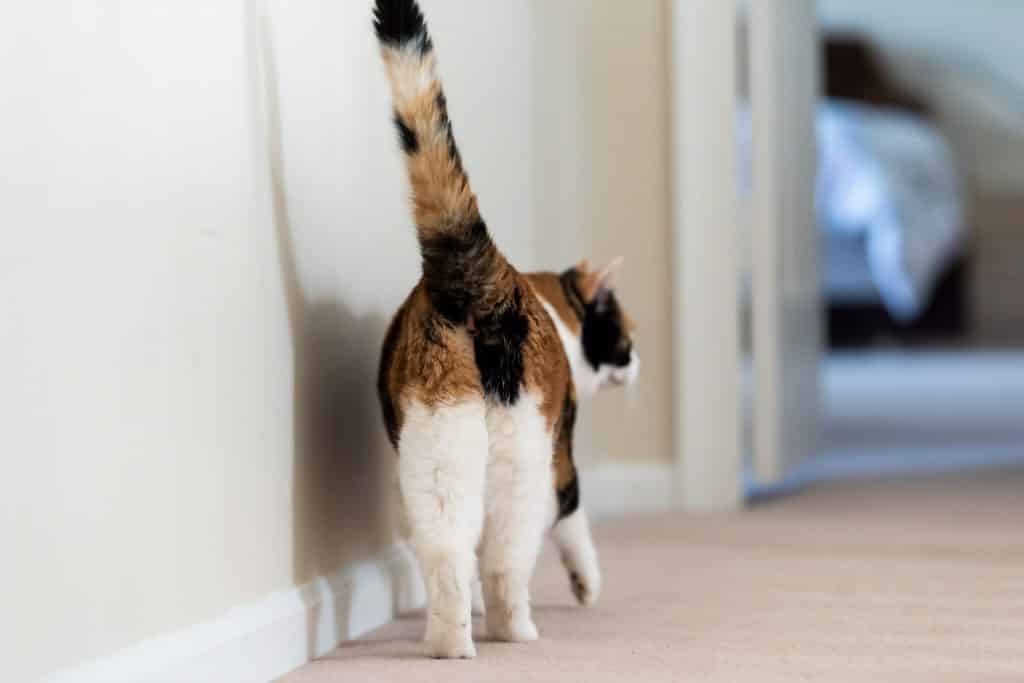
- Excessive Affection and Restlessness: The cat may rub intensely against furniture, walls, doorways, and people to deposit pheromones from scent glands located on her face, paws, and tail base. This is often accompanied by pacing and a need for tactile stimulation.
- Urine Marking and Spraying: Driven by high estrogen levels, the queen may spray small, potent amounts of urine onto vertical surfaces. This urine is laden with hormonal signals (pheromones) to attract toms.
- The Mating Posture (Lordosis): When sexually receptive, the queen assumes a characteristic stance. She crouches low, elevates her hindquarters, holds her tail to one side, and performs a treading motion with her hind feet. This lordosis posture is the presentation required for mating.
- Rolling: Frequent and vigorous rolling on the floor is part of the scent-spreading repertoire, often accompanying the intense vocalizations.
The Biological Timing: Stages of the Feline Reproductive Cycle
Cats are defined as seasonally polyestrous, meaning they have multiple recurring estrus cycles concentrated within a distinct breeding season. In the Northern Hemisphere, the season typically spans from late January to October, governed by the increasing hours of daylight (photoperiod).
The full hormonal cycle is divided into five stages:
| Hormone Cycle Stage | Time Span | Receptivity and Key Hormonal Changes |
|---|---|---|
| Proestrus | 12 hours to 3 days | First signs of attraction/vocalization appear, but the cat is typically not receptive to mating. Estradiol (estrogen) levels begin to rise. |
| Estrus (Heat) | 1 to 21 days (Average 4–7 days) | Full sexual receptivity. Exhibits all hallmark behaviors (yowling, lordosis). Estradiol levels peak. |
| Interestrus | 7 to 21 days | The transitional phase occurring between estrus cycles if the cat does not mate. Hormonal behaviors cease, but the queen prepares to recycle quickly. |
| Diestrus | 61 to 72 days | Occurs after breeding and resulting in either true pregnancy or a pseudo-pregnancy (false pregnancy). Progesterone is the dominant hormone. |
| Anestrus | October to January | The period of complete reproductive inactivity, occurring when the photoperiod is short (late fall/winter). This stage is often absent in indoor cats due to consistent artificial lighting. |
The Significance of Induced Ovulation
Unlike spontaneous ovulators (like humans and dogs), the female cat is an induced ovulator. This means that the act of mating (coitus) is required to trigger the necessary release of luteinizing hormone (LH), which causes the egg (ovum) to be released from the ovary. This has profound implications for breeding and management:
- Multiple Sires: A single litter of kittens can have multiple fathers, as the queen may mate with several toms during one estrus cycle.
- Continuous Cycling: If the queen is not bred or does not ovulate successfully, she enters the short Interestrus phase and then returns to Estrus rapidly. This explains why unspayed cats can cycle relentlessly, sometimes twelve or more times during the breeding season.
- Postpartum Estrus: Queens can return to heat as soon as two weeks after giving birth, creating the potential for a rapid, back-to-back pregnancy cycle that is physically taxing.
The Health Imperative: Why Spaying is Essential
Spaying (ovariohysterectomy) is the complete removal of the ovaries and uterus. As a Veterinary Reproductive Health Specialist, I stress that this procedure is not just about population control; it is critical preventive medicine.
Cats do not undergo menopause; therefore, an unspayed queen faces lifelong exposure to high hormonal risk. The primary life-threatening risks eliminated by spaying include:
- Pyometra: This is a severe, life-threatening bacterial infection of the uterus that universally affects unspayed queens. It occurs most often in the weeks following estrus due to hormonal changes that suppress uterine immunity. Pyometra requires emergency surgery and is often fatal if diagnosis or treatment is delayed.
- Mammary Gland Tumors: Spaying dramatically reduces the risk of developing malignant mammary tumors, especially when performed early (before the first or second heat cycle). Studies show that the risk of a cat developing mammary cancer is reduced by approximately 91% if spayed before six months of age.
- Hormone-Driven Behavioral Issues: Eliminates the stress and owner-distress associated with persistent yowling, spraying, and escape attempts.
Compassionate Management of a Cat in Heat
The only permanent solution to prevent heat cycles and the associated behaviors is spaying. However, if your cat is cycling and awaiting surgery, the goal is to provide comfort and strict prevention:
- Zero Tolerance for Outdoor Access: Strict confinement is non-negotiable to prevent unplanned pregnancy.
- Environmental Support: Use synthetic feline facial pheromone diffusers to reduce anxiety and restlessness. Maintain a clean litter box to mitigate the drive to spray.
- Enrichment and Distraction: Engage your cat in frequent, high-intensity play sessions to redirect her hormonal energy. Catnip or highly interactive toys can be beneficial for distraction.
- Comfort Measures: Providing a heated bed or pad can satisfy the cat’s often heightened desire for warmth and physical pressure during estrus.
Timely surgical intervention is the most effective and responsible choice, securing both the cat's health and eliminating contribution to the companion animal overpopulation crisis.
Frequently Asked Questions (FAQ)
Q: Why is Pyometra such a critical health risk for unspayed female cats?
A: Pyometra is a severe, systemic infection of the uterus, typically occurring 2–8 weeks after a heat cycle when high progesterone levels cause the uterine lining to thicken and suppress the immune system. The uterus fills with pus, leading to severe toxemia and septic shock. It requires emergency surgical removal of the uterus and is often fatal if not treated immediately.
Q: What is the optimal age to spay a female kitten?
A: The current consensus among veterinary organizations favors early-age spaying, typically between 5 to 6 months of age, or ideally before the cat experiences her first heat cycle. Early spaying significantly reduces the lifelong risk of mammary gland tumors and eliminates the stress of the first estrus.
Q: Why do cats yowl so loudly when they are in heat?
A: The intense, often frantic yowling is a biological necessity. It is a hormone-driven advertisement (acoustic signaling) intended to carry over long distances, notifying male cats in the vicinity of her peak reproductive availability. The sound is designed to be impossible to ignore.
Posting Komentar untuk "The Feline Reproductive Cycle: Duration, Stages, and the Biological Imperative for Spaying"