
How long cats can survive without food/water: Critical facts

Why cats are particularly at risk
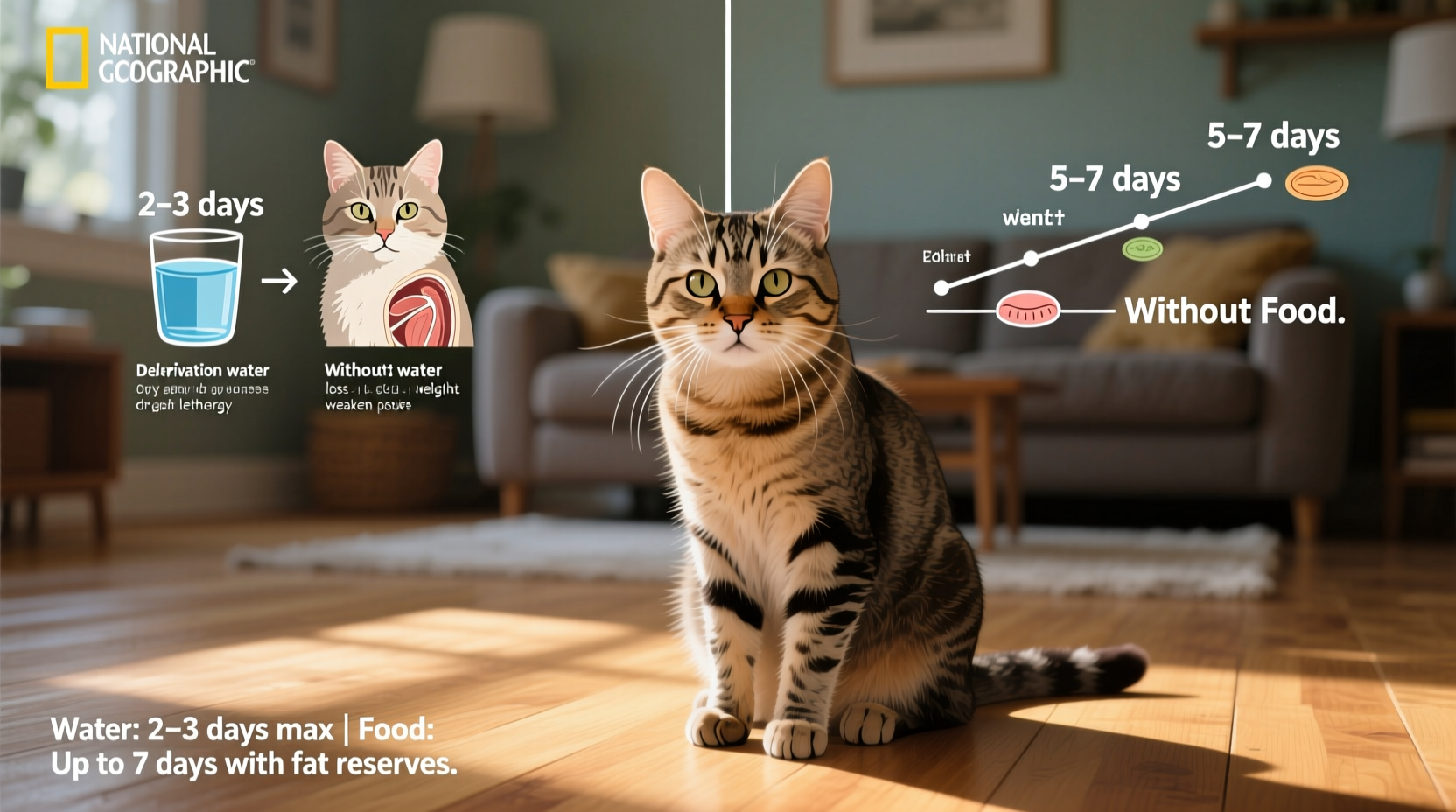
Unlike dogs, cats are evolutionarily dependent on regular small meals. Even short breaks in their diet severely disrupt their metabolism. Particularly critical is their poor glycogen storage capacity (carbohydrate reserves). If food is refused, the body immediately resorts to fat reserves, which in cats quickly leads to fatty liver disease (hepatic lipidosis) – a life-threatening condition with a mortality rate of up to 90% without treatment.
| scenario | Survival time | Critical warning signs |
|---|---|---|
| Healthy adult cat without water | 3-4 days | Dry mucous membranes, poor skin elasticity, sluggishness |
| Healthy adult cat without food (with water) | 7-14 days | From 24 hours onwards: vomiting, yellowing of the mucous membranes, apathy |
| Young cats (<6 months) | Water: 24-36 hours ; Food: 3-4 days |
Rapid dehydration, hypoglycemia, seizures |
| Older cats (over 10 years old) | Water: 48-60 hours ; Food: 4-7 days |
Worsening of chronic diseases |
| Sick cats (kidney disease, diabetes) | Water: 24-48h Food: 2-3 days |
Sudden decline in health, shortness of breath |
When you need to act immediately: The 24-hour rule
The most common misconception: "My cat sometimes doesn't eat – it'll go away on its own." But with cats, there's a clear limit: After just 24 hours of loss of appetite, a veterinary examination is essential . Why?
- Fatty liver development : After 48 hours without food, the liver produces toxic fatty acids.
- Risk of dehydration : Cats fed dry food need an additional 200-300ml of water per day.
- Metabolic collapse : Life-threatening within hours for diabetics or kidney patients.
Critical situations in detail
When traveling or on vacation : Cats should never be left unattended for more than 12 hours. Automatic food and water dispensers can fail – always leave an emergency contact address.
After surgery : Postoperative cats need food within 12 hours to support wound healing. Appetite stimulants such as olfactory stimuli (tuna water) can help, but do not replace veterinary care.
In stressful situations (moving, new pet): Loss of appetite for up to 24 hours can be normal, but immediate action is required afterward. Never try to force-feed cats – this will only worsen the stress.
Practical emergency measures
If your cat is not eating or drinking:
- Contact your veterinarian immediately – explain how long the loss of appetite has lasted.
- Check fluid intake : In case of dehydration (slippery skin fold returns to its original position in >2 seconds), administer water drop by drop using a syringe.
- Food options vary : Warm tuna water, baby food (onion- and garlic-free), easily digestible foods such as chicken broth.
- No home remedies : Milk worsens dehydration, oil or butter are counterproductive.
Common misconceptions
Prevention is the best strategy.
Regular weight checks (weighing monthly) help detect loss of appetite early. Always develop an emergency plan with your veterinarian for chronically ill cats. Install multiple water bowls – cats prefer to drink from separate bowls rather than next to their food. For stress-prone cats: automatic feeders with timers prevent sudden interruptions.
Posting Komentar untuk "How long cats can survive without food/water: Critical facts"